404 · Address Not Found
KerbNet Navigatorv3.14 · Kerbin
🔒kerbin://keedmartin.kerbin/
HESTIA● KSS
KMSK · MSC advanced systems contractor · VAJE · FSOM · Passage · VESTA · SSTO · AURORA
KeedMartinSkunk Works Division · KMSK
Keed Martin Skunk Works - Advancing the Impossible
INTERPLANETARY · SSTO · DEEP SPACE · AURORA?

They started with a nozzle and a press release.

KeedMartin Skunk Works entered the MSC program as a subsystem vendor with afterburning jet engines and an OMQ dispute about payload figures. They now operate a deep-space probe in solar orbit, the best deep-space camera in the program, a wormhole transit mission, an SSTO prototype that flew once perfectly and never flew again, and a science satellite aboard the first interplanetary vehicle. They are also, allegedly, building the next one. KeedMartin has neither confirmed nor denied this.

Unorthodox.Unnoticed.Unmatched.
9
Programs across 9 eras
2
Probes through the Juno wormhole
1
SSTO flight achieved (once)
0
Crew lost
?
AURORA · no comment
Unorthodox.
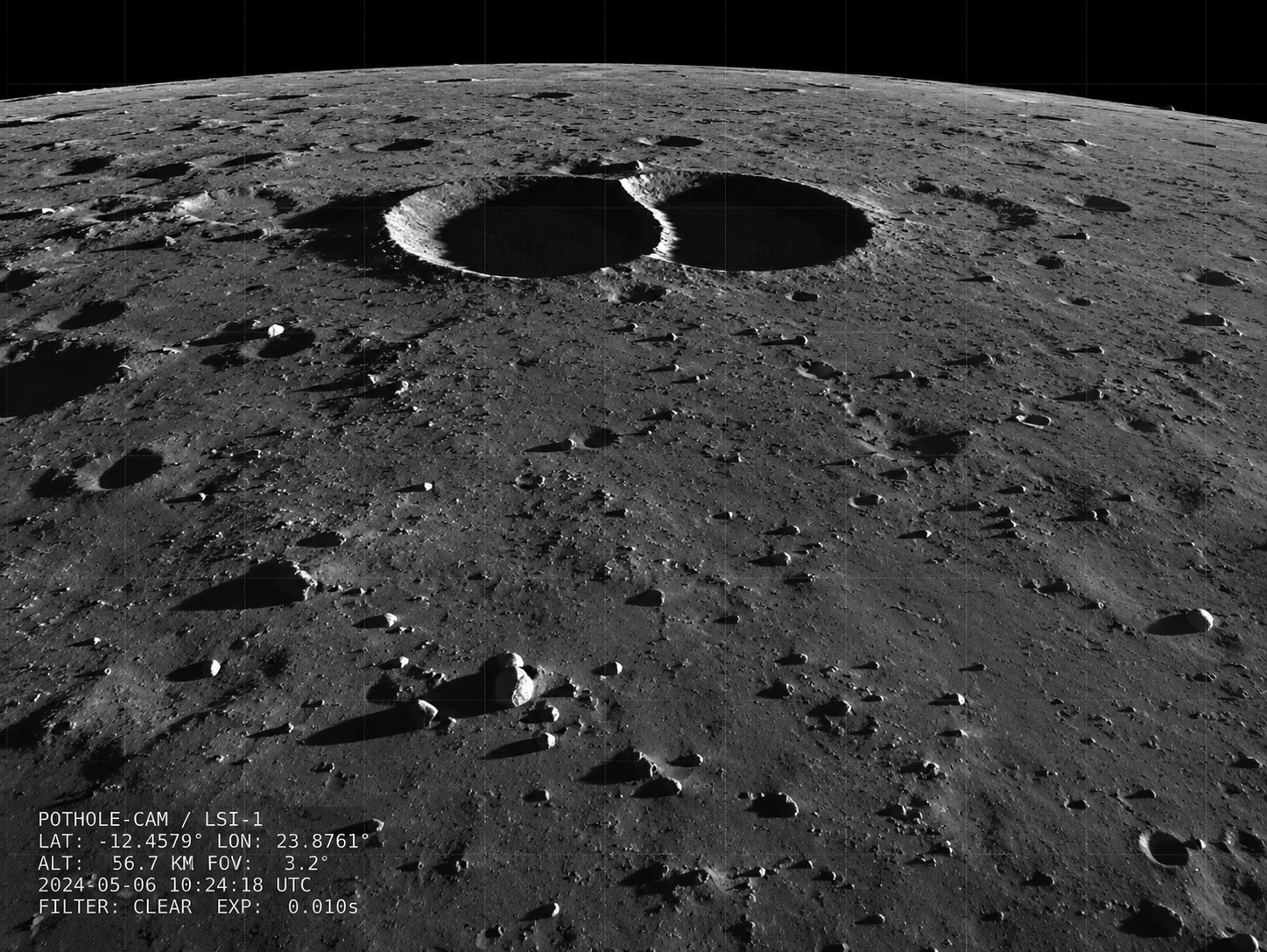
POTHOLE-CAM was a newspaper's pothole tracker. We looked at the optics and built CLEARVIEW-1 for deep space. The telescope in solar orbit right now started as a road inspector. Then we sent a probe through a wormhole.
Unnoticed.
KOEING won KerbalOrbit. KerbalX won SOLARCOM. KeedMartin Skunk Works self-funded a probe past the Mun, through a gravity assist, into solar orbit. Then we built two SSTO prototypes that flew once and never flew again. Then we sent a probe through a wormhole. No contract. No mandate. No press release.
Unmatched.
CLEARVIEW-1 resolves to 0.3 arcseconds. OMQ confirmed it exceeds the published spec. Passage 1 confirmed the Juno wormhole as traversable in both directions. Passage 2 is in another stellar system. VESTA is in Duna orbit, operated from HESTIA. And then there is the AURORA question, which KeedMartin has neither confirmed nor denied.

KMSK · Active and heritage portfolio

Nine programs. Seven flying. One grounded. One alleged.

DEEP SPACE · SOLAR ORBIT
Nominal

FARVIEW-1

Solar orbit telescope probe · CLEARVIEW-1 imager

Self-funded. No NASA mandate, no contract. Launched on the FSOM+SLS2 stack through a Mun gravity assist into solar orbit. CLEARVIEW-1 captured the best Mun imagery ever transmitted, then “The Farewell Shot” (4.2M shares), then an anomalous point source in the first deep-field image. That point source is Juno. FARVIEW-1 is repositioning. KIA interest confirmed.

Resolution0.3 arcsec · exceeds published spec
StatusSolar orbit · ion cruise · repositioning
HeritagePOTHOLE-CAM optics lineage
Exceeds specFirst MSC deep-field★ Farthest MSC asset
WORMHOLE TRANSIT · ERA 6
1 returned · 1 lost

PASSAGE

Juno wormhole traversal probes · LIMINAL patch

Two probes. One patch. Passage 1 confirmed Juno as a stable traversable wormhole: a 90-second dip, a 14-hour full transit, clean return. Landing was rough. Passage 2 went through one-way by design. Contact lost instantly. Last telemetry: all systems nominal. It is in another stellar system. Katdorf posted a photo of empty space. No caption. 11 million likes.

Passage 1Wormhole confirmed · 14 hrs far-side · rough splashdown
Passage 2Through Juno · contact lost · in another system
PlatformORION Mk2 solar orbit launch
★ First wormhole transit★ First interstellar asset11M likes · no caption
DUNA SCIENCE · ERA 9
Aboard HESTIA

VESTA

Repositionable Duna-orbit science satellite

Carried by HESTIA, now in Duna orbit. Multiple telescopes and relays. Detachable and re-attachable so the Mission Specialist can find the optimal Duna orbit placement. FARVIEW heritage. The programme's eyes at the destination before crew arrive. Melody Kerman controls VESTA from a windowed station in HESTIA's hab module. She did not ask for it. She has it anyway.

BuilderKeedMartin · FARVIEW heritage
OperatorMelody Kerman · Mission Specialist
StatusIn Duna orbit (250km x 1,200km)
FARVIEW lineageIn Duna orbitRepositionable
PROPULSION
In service

FSOM

Final Stage Orbital Maneuver engine

Mounts between payload and the KOEING SLS2 third stage. Adds a high-impulse injection burn that extends the delivery envelope. Two launches, two successes: POTHOLE module to LSI 1, and FARVIEW-1 solar orbit insertion.

2 / 2 nominalDeep-inject capableSLS2 + FSOM
PROPULSION · ERA 1
In service · SH-4 · Unity

VAJE

Vertical Afterburning Jet Engines

Air-augmented 0-25 km, gimbaled thrust vector control. Flying on KerbalX Starship Heavy 4. OMQ confirmed 6-8% payload improvement versus the 15% we published. The debate continues. The engines are on orbit. Six VAJE-lineage air-breathing afterburners now fly on OTS Hull 2 (Unity) for descent cross-range recovery. The nozzle that started the argument has a family now.

SH-4 · operationalUnity · 6 afterburnersOMQ: 6-8% · KMSK: 15% · ongoing
IMAGING · HERITAGE
In orbit · LSI 1 (retired)

POTHOLE-CAM

High-Resolution Optical System · LSI 1

Developed for the Kerbin First Daily's station module. Resolves to ~0.4m at nadir. Incidentally capable of high-quality astronomical observation. CLEARVIEW-1 derives from these optics. KFD still used it primarily for potholes. Katdorf used it for deep-space pointing during night passes. LSI 1 has been deorbited. The optics lineage continues in solar orbit and aboard HESTIA.

KFD-owned moduleKMSK opticsCLEARVIEW-1 heritage

Deep space · Wormhole transit · Era 6 · LIMINAL

PASSAGE

Two probes. One wormhole. One came back. One did not.

The Juno object was an anomaly on a FARVIEW-1 deep-field image. It had a name and no explanation. KeedMartin Skunk Works built two probes on a compact deep-space bus, launched them from an ORION Mk2 solar orbit platform, and sent them through.

Passage 1 performed a 90-second dip through the aperture, came back, spent 14 hours on the far side, and returned through it again. The wormhole was confirmed as traversable in both directions. The landing was rough: 40 m/s water impact, sensor bay flooded, probe sank in 600 meters. The data was already on the ground. The hardware had done its job.

Passage 2 was one-way by design. The transit was clean. For 0.3 seconds, telemetry was nominal. Then everything stopped. No degradation, no fading, no progressive failure. One frame: all green. Next frame: absent. The probe is, by all available evidence, still operational in another stellar system. It is recording data that nobody can receive.

Three days after contact loss, Katdorf Kerman posted a photo of the night sky. The region where Juno is located. No caption. 11 million likes in a week. The most shared image in the programme's public history, later surpassed only by Val's “we are on our way.” The empty space where Passage 2 should be.

Bus
KeedMartin Skunkworks compact deep-space
Mass
~800 kg fully fueled
Delta-v
1,800 m/s bipropellant
Antenna
1.4m deployable high-gain
Passage 1
Wormhole confirmed · 14 hrs far-side · returned
Passage 2
Through Juno · contact lost · in another system
Patch
LIMINAL · one patch, two meanings
Follow-on
Gateway Probe (reserved patch BRIDGE) · not built
★ First wormhole transit★ First interstellar asset★ 11M likes · no caption

Era 6-7 · SSTO program · Grounded

The X-1 flew once. The X-2 confirmed it was not an accident.

Both vehicles are grounded. Both engine failures are identical. Ten seconds after full thrust, both engines cut simultaneously. No warning, no degradation, no telemetry anomaly preceding the shutdown. Every component tested nominal. The failure is emergent. The design itself is the defect. SOLACE is a name without a vehicle until it is solved.

SSTO · ERA 6 · GROUNDED
Grounded

X-1

Single-Stage-to-Orbit demonstrator

First flight: flawless. Ludcan Kerman took off from the runway, climbed to low Kerbin orbit under its own power, orbited once, reentered, touched down on the centerline. SSTO was real. One flight, one orbit, one landing. The engineering community had been arguing for years. The X-1 settled the argument.

Second flight: both engines cut at roughly 10 seconds after full thrust. No warning. No fault codes. Every component tested clean in teardown. The X-1 sits in the Skunkworks hangar, waiting for an answer nobody has been able to find.

1 successful flight1 identical failureTest pilot: Ludcan Kerman
SSTO · ERA 7 · GROUNDED
Grounded

X-2

Enhanced SSTO with cockpit-ejection abort pod

Same propulsion architecture. Deliberate. The new telemetry captured everything and explained nothing. Both engines cut at the same 10-second mark. Same failure, same timing, same total shutdown. Every sensor read nominal up to the moment of cutoff. The abort pod was never used. Ludcan walked away from both failures the old-fashioned way: by braking to a stop.

The diagnosis: a shared architectural issue. Not a broken part. The way the fuel system, ignition system, and engine controllers interact under the specific conditions of full-thrust ground operation. The hardest class of engineering problem. There is no broken part to replace.

Identical failureFull telemetry · no explanationAbort pod: unused
SSTO SHUTTLE · ON HOLD
On hold

SOLACE

Single-stage Orbital Logistics and Crew Egress

X-1 derived. Winged, tail-landing SSTO shuttle. Four crew, 2-ton cargo bay, 72-hour turnaround target. Designed for crew rotation, emergency egress from stations, and rapid response. The vehicle is fully assembled. The crew cabin is fitted. The cargo bay is configured. The thermal protection is installed. Everything is ready except the one thing that matters: an engine that will not fail.

X-1 derivedFully assembledBlocked by propulsion
OPEN PROBLEM

The X-1/X-2 propulsion failure is the Skunkworks' primary unsolved problem. Two vehicles, same engine, same cutoff, same absence of explanation. The answer is out there. It has not been found yet. SOLACE is a name without a vehicle until it is.

Era 8-9 · Interplanetary · Aboard HESTIA

VESTA

The programme's eyes at the destination before crew arrive.

VESTA is a repositionable Duna-orbit science satellite, KeedMartin-built with FARVIEW heritage. Multiple telescopes, relays. Detachable and re-attachable so the Mission Specialist can find the optimal Duna orbit placement. It is docked to HESTIA right now, in Duna orbit, alongside the first crew ever sent to another planet.

The VESTA control station sits in HESTIA's Habitation Module. It has a window. Melody Kerman did not ask for it and did not need it. She has it anyway. She is going to use it. When HESTIA arrives at Duna, VESTA will detach and find its orbit. The programme will have eyes at the destination before the crew land.

KeedMartin Skunk Works also contributed to HESTIA itself. The tri-party build (KeedMartin, KOEING, KerbalX) carries Skunkworks hardware across the vehicle. The classified propulsion is not confirmed to be a Skunkworks program. It is not denied to be one. The AURORA question, if genuine, would make HESTIA's drive the first of a class rather than a one-off.

Class
Repositionable Duna-orbit science satellite
Builder
KeedMartin · FARVIEW heritage
Carried by
HESTIA · Enduring Interplanetary Vehicle
Operator
Melody Kerman · Mission Specialist
Status
In Duna orbit · operational
HESTIA role
Tri-party build contributor · classified propulsion
★ FARVIEW lineage at Duna★ Aboard first interplanetary vehicle

Deep space · Solar orbit · CLEARVIEW-1 active

FARVIEW-1

First MSC asset in solar orbit. Self-funded by KMSK.

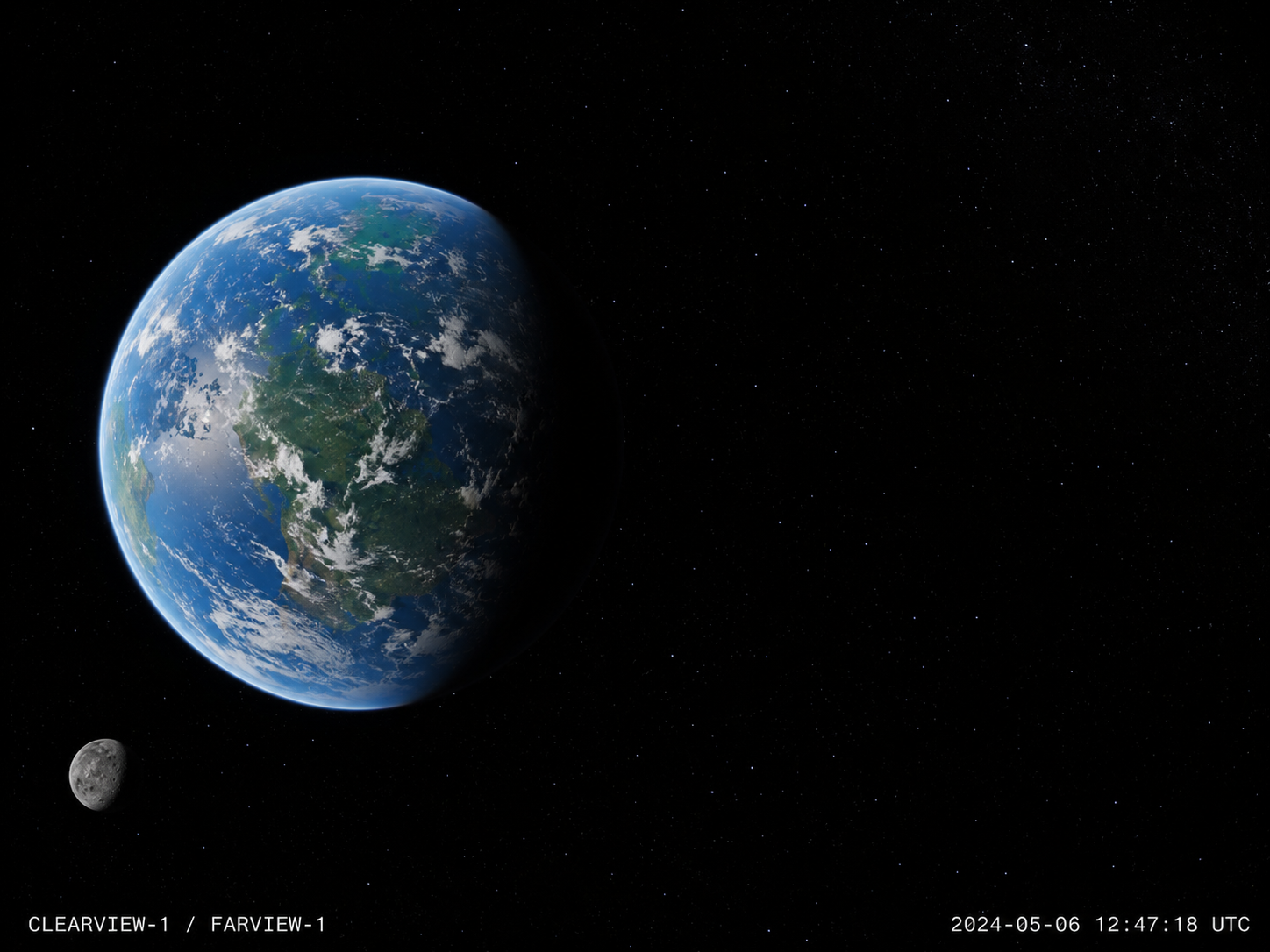
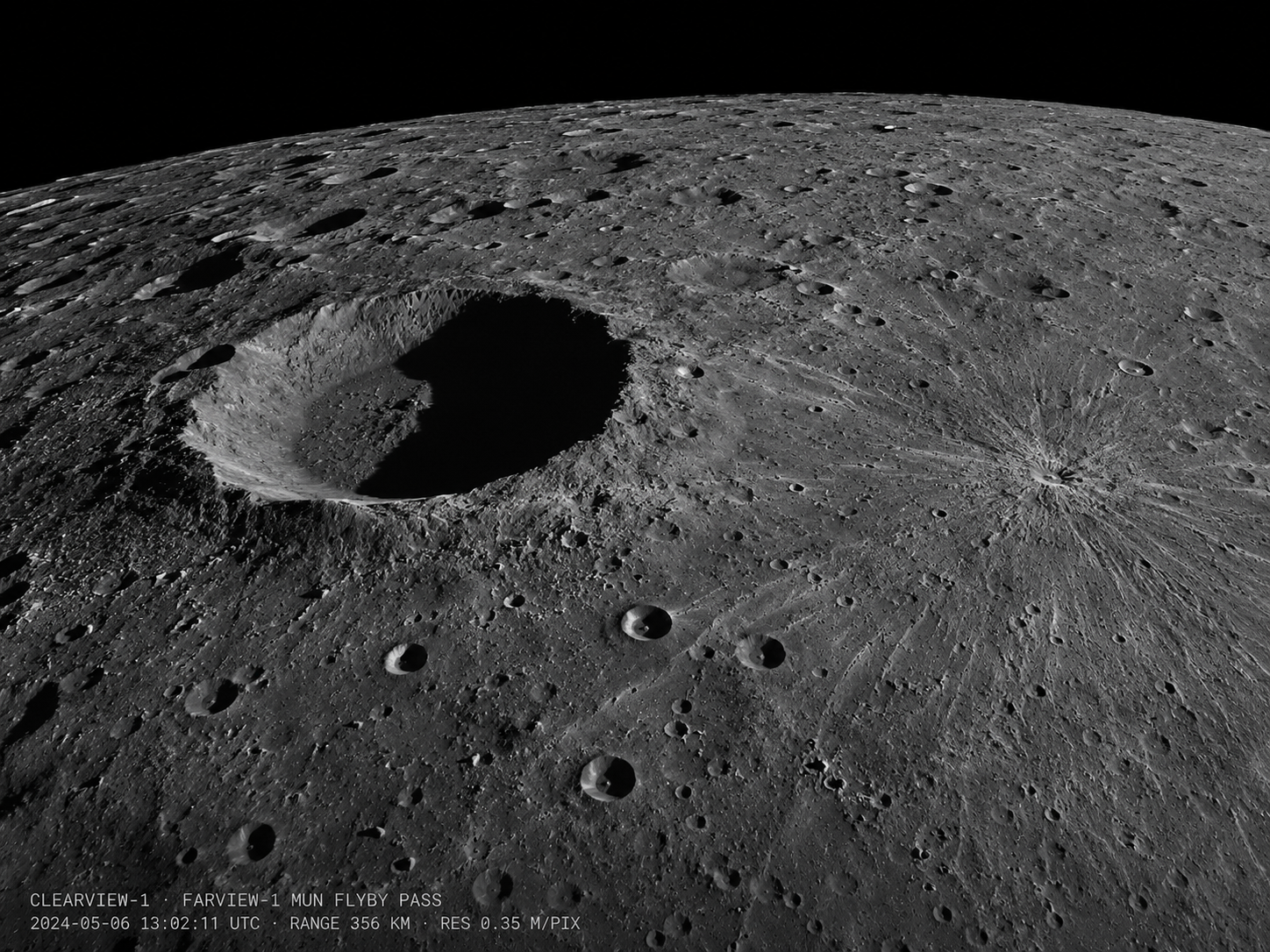
Launched on the FSOM+SLS2 stack with no NASA mandate and no contract. The FSOM provided trans-Mun injection and solar orbit insertion. CLEARVIEW-1 captured the Mun's surface during the gravity assist flyby. Then FARVIEW-1 sent “The Farewell Shot” - Kerbin and the Mun in a single frame from departing trajectory. 4.2 million shares in 48 hours.

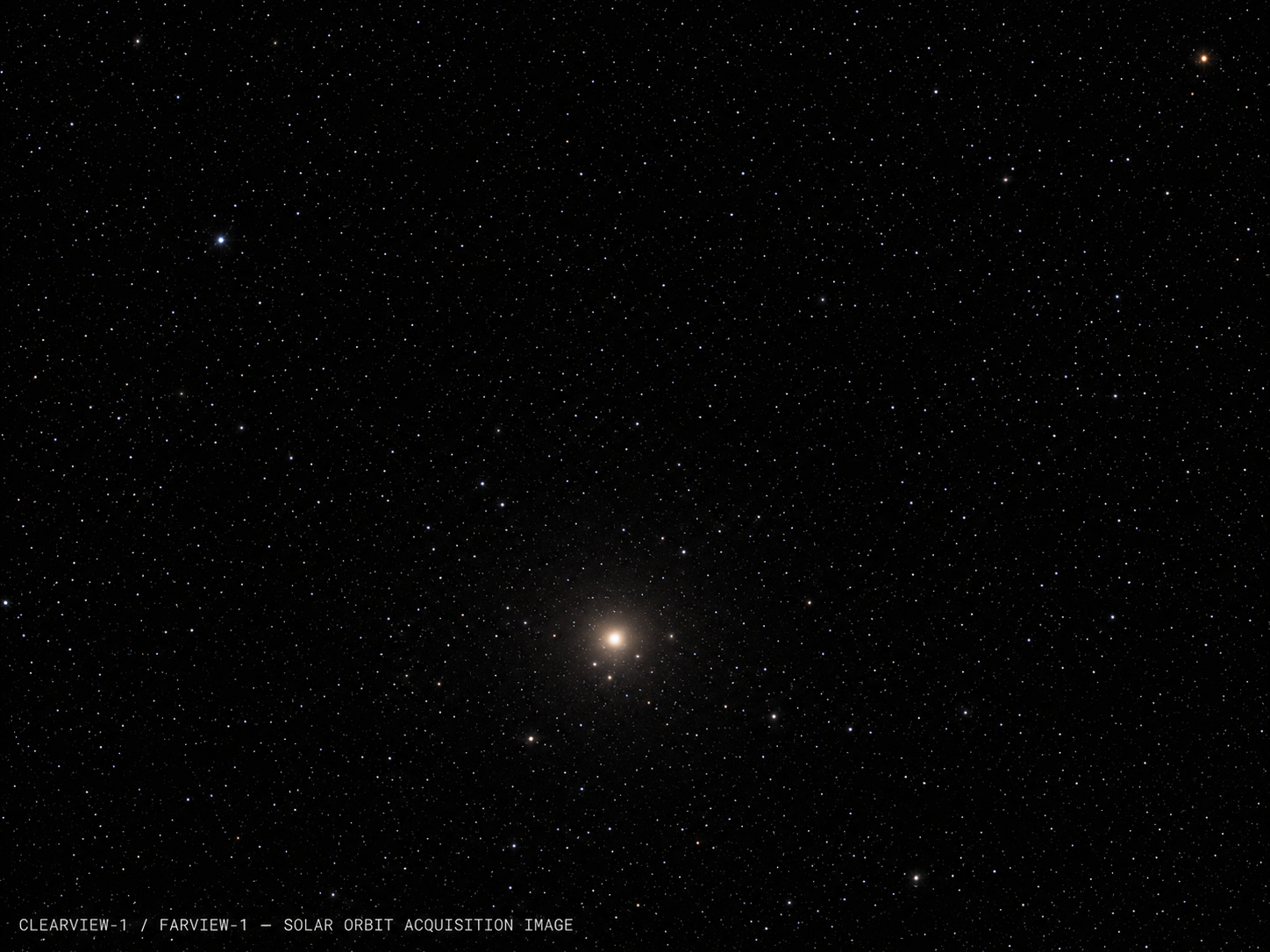
From solar orbit, CLEARVIEW-1's first deep-field image contains an anomalous point source in the upper-right frame. That point source is Juno. NASA did not respond to two press inquiries. KIA interest in FARVIEW-1's observation targets is confirmed. At least two planned observation targets are in the direction of the unknown object. FARVIEW-1 is repositioning.

Propulsion · primary
FSOM chemical · expended at solar insertion
Propulsion · cruise
Xenon ion engine · continuous burn
Communications
High-gain → SOLARCOM relay → ground
Primary instrument
CLEARVIEW-1 · 0.3 arcsec · exceeds spec
Current status
All systems nominal · repositioning
KIA interest
Confirmed · 2+ targets → unknown object direction
Funding
KMSK self-funded · no NASA mandate
Discovery
Anomalous point source → Juno
★ First MSC deep-space probe★ First gravity assist★ First solar orbit insertion★ Found Juno
CLEARVIEW-1: The Farewell Shot - Kerbin and the Mun from departing trajectory
CLEARVIEW-1 · FARVIEW-1 · Departure trajectory“The Farewell Shot” - 4.2M shares. Most-shared image in MSC history at the time.
CLEARVIEW-1: Mun surface during gravity assist flyby
CLEARVIEW-1 · Mun gravity assistOMQ: “comparable to purpose-built planetary probes.”
CLEARVIEW-1: First solar orbit deep-field image - anomalous point source visible
CLEARVIEW-1 · First solar orbit deep-fieldAnomalous point source · upper-right frame · This is Juno. NASA: no comment.

Engineering data

KMSK systems manifest

KMSK · Systems Status · ASD Internal · v11
SYSTEMSTATUSNOTE
VAJE enginesIN SERVICESH-4 + Unity (6 afterburners) · OMQ: 6-8% · debate: open
FSOM · stage engineIN SERVICE2 flights · 0 anomalies · SLS2 only
POTHOLE-CAM opticsHERITAGELSI 1 retired · lineage: CLEARVIEW-1 → VESTA
CLEARVIEW-1 cameraSOLAR ORBIT0.3 arcsec · exceeds spec · SOLARCOM uplink nominal
FARVIEW-1 probeSOLAR ORBITSelf-funded · ion cruise · repositioning · found Juno
Passage 1 probeCOMPLETEWormhole confirmed · 14 hrs far-side · rough splashdown
Passage 2 probeLOST CONTACTThrough Juno · in another stellar system · last telem: nominal
X-1 / X-2 SSTOGROUNDEDIdentical engine cutoff ~10s · root cause: unknown · SOLACE blocked
SOLACE shuttleON HOLDAssembled · crew cabin fitted · blocked by X-1/X-2 propulsion issue
VESTA satelliteIN DUNA ORBITAboard HESTIA · Duna orbit · FARVIEW heritage · operator: Melody K.
X-9 AURORAALLEGEDPaper vehicle publicly · working airframe allegedly · HPJSD drive · no comment
Juno · IMG-001UNIDENTIFIED → NAMEDWormhole confirmed · NASA: no comment · KIA: confirmed interest

Station portfolio · LSI 1 (retired)

LSI 1 - KMSK footprint

Three modules on orbit before LSI 1 was deorbited with full honors. More KMSK-designed or delivered hardware than any contractor except KerbalX. We arrived with a hab and a cupola. We redirected the entire observation program through our optics. LSI 1 is gone now. The optics lineage continues in solar orbit and aboard HESTIA.

RESTLESS
LSI-RESTLESS · Habitation module
Retired

Long-duration crew quarters, KerbalNet uplink, FSOM-delivered. Solar arrays deployed by Huddin Kerman during EVA-002 - zero anomalies. The reason MSC-003 could leave two kerbals on LSI 1 and call it a stay rather than a visit. The first KeedMartin hardware people actually lived inside.

KMSK designFSOM deliveredEVA-002 · clean
OBSERVE
LSI-OBSERVE · Cupola & utility
Retired

EVA monitoring, docking navigation, utility staging. Increasingly used alongside the POTHOLE module for coordinating astronomical observation. Katdorf Kerman ran POTHOLE pointing sessions from the OBSERVE cupola during night passes. The coordinates she was targeting were not in the public record.

KMSK designEVA opsPOTHOLE coordination
POTHOLE delivery
LSI-POTHOLE · KFD module · FSOM stack
Retired · KFD

KMSK didn't build POTHOLE. Kerbin First Daily funded it, pointed it at roads, and published a pothole on page 1. KMSK designed and flew the FSOM stack that delivered it - first operational FSOM launch. The optics we recognised in that telescope became CLEARVIEW-1. The telescope was still mostly photographing potholes when LSI 1 was deorbited. The lineage is what matters.

FSOM deliveryKFD ownershipinadvertently astronomical

Heritage · Era 1 through Era 9

Smallest team at program start.
Widest operational footprint by Era 9.

Era 1
VAJE - first KMSK hardware on orbit

KeedMartin Skunk Works enters the MSC program as a subsystem vendor. VAJE air-augmented engines fly on KerbalX's SH-4. OMQ publishes its first KMSK correction - 6-8% vs our stated 15%. We note that the engines are flying.

Era 3
RESTLESS + OBSERVE - crew live in our hardware

Two LSI module slots. RESTLESS delivers long-duration crew quarters. OBSERVE gives the station its EVA coordination hub. Huddin Kerman's EVA-002 deploys the RESTLESS solar arrays without anomaly. KMSK has hardware people live inside now.

Era 4
FSOM service entry - POTHOLE delivered, CLEARVIEW designed

First operational FSOM launch delivers the KFD POTHOLE module to LSI 1. Station crew examines the telescope within hours and identifies its astronomical capability. KMSK identifies the same capability and begins CLEARVIEW-1 design.

Era 5
FARVIEW-1 - solar orbit - CLEARVIEW-1 finds Juno

Self-funded. No mandate. FSOM+SLS2 carries FARVIEW-1 through trans-Mun injection to a Mun gravity assist to solar orbit insertion. CLEARVIEW-1 captures the best Mun imagery ever transmitted, then “The Farewell Shot,” then an anomalous point source. That point source is Juno. Ion engine nominal.

★ First deep-space probe★ Found Juno
Era 6
LIMINAL - Passage probes through the Juno wormhole

Two probes, one patch. Passage 1 confirms Juno as a traversable wormhole: a 90-second dip, a 14-hour full transit, clean return. Rough landing, data recovered. Passage 2 goes through one-way. Contact lost instantly. Last telemetry: all systems nominal. It is in another stellar system. Katdorf posts a photo of empty space. No caption. 11 million likes.

★ First wormhole transit★ First interstellar asset
Era 6-7
X-1 / X-2 - SSTO achieved, then grounded

The X-1 flies once: runway to orbit to runway. SSTO is real. The second flight: both engines cut at 10 seconds. The X-2 with full telemetry captures everything and explains nothing. Same failure, same timing. SOLACE, the operational shuttle derived from the X-1, is fully assembled and cannot fly. The design itself is the defect.

SSTO provenSSTO groundedOpen problem
Era 8
VESTA + HESTIA - the interplanetary era begins

KeedMartin joins the tri-party HESTIA build alongside KOEING and KerbalX. VESTA, a FARVIEW-heritage science satellite, is aboard. The classified propulsion is not confirmed to be a Skunkworks program. It is not denied to be one. The AURORA question surfaces here.

Era 9
AWAY - HESTIA departs. VESTA aboard. AURORA?

HESTIA is in Duna orbit. VESTA is in its operational orbit. Unity, the second OTS hull, carries six VAJE-lineage afterburners for descent cross-range recovery. And the Aurora Working File - an alleged internal document describing a follow-on interplanetary vehicle with a second-generation drive - has surfaced in unofficial channels. KeedMartin has neither confirmed nor denied. HESTIA has to fly first.

★ HESTIA in Duna orbit★ VESTA aboardAURORA: no comment
Era 9
ARRIVAL - HESTIA in Duna orbit. Insertion first pass. VESTA deploys.

The 58-day transit from AWAY is complete. HESTIA arrived at Duna on insertion first pass and is now in Duna orbit. Valentina makes the first EVA in Duna orbit. VESTA detaches and stays on as a permanent Duna science asset. Eight crew. Zero lost. Return-leg cryosleep deferred. Return TBD.

★ HESTIA in Duna orbit★ first Duna EVAVESTA stays on

RESTRICTED ACCESS

Program Aurora. The file that should not exist.

An alleged internal KeedMartin Skunkworks working file has surfaced in unofficial channels. It describes a follow-on to HESTIA: a smaller, more capable vehicle with a second-generation drive that does not scale fuel with distance. The document says a working airframe exists. KeedMartin has neither confirmed nor denied. NASA has declined to comment. OMQ refuses to publish excerpts pending verification.

If genuine, HESTIA's drive is the first of a class. If forged, it is exceptionally well done. The file is marked for shredding after review cycle. You are reading a copy that is outside a Skunkworks-controlled facility. That is itself evidence of a security failure.

Enter classified files ↗
Transmitted imagery · CLEARVIEW-1 · POTHOLE-CAM heritage · KMSK optical lineage
Mun surface - POTHOLE-CAM first astronomical image from LSI 1
Mun near-side · POTHOLE-CAM · First LSI 1 astronomical image
Mun flyby - CLEARVIEW-1 during gravity assist
Mun flyby · CLEARVIEW-1 · Gravity assist · OMQ: “purpose-built probe” resolution
First solar orbit deep-field - anomalous point source
Deep-field · Solar orbit · Anomalous point source · This is Juno

KMSK · Forward trajectory

What we are building toward.

The Skunkworks does not publish a roadmap. But the hangar has a shape, and the shape tells you what comes next. These are not promises. They are directions.

PROPULSION · BLOCKING
Active investigation

SSTO propulsion fix

X-1 / X-2 root cause and SOLACE unblock

The hardest class of engineering problem: no broken part to replace. The design itself is the defect. Two vehicles, same engine, same cutoff, same absence of explanation. Until this is solved, SOLACE cannot fly and the SSTO concept stays grounded. The investigation is the Skunkworks' primary open problem. Everything downstream depends on it.

BlockingRoot cause: unknown
VESTA · DUNA OPERATIONS
In Duna orbit

VESTA deployment

Repositionable Duna-orbit science satellite

VESTA detaches from HESTIA at Duna and finds its orbit. Melody Kerman operates it from a windowed control station. If VESTA works, the programme has eyes at the destination before crew land. FARVIEW heritage, validated at Duna. The next iteration could be a fixed Duna-orbit observation platform, or a relay network for surface operations.

FARVIEW lineageEyes before crew
ALLEGED · COMPARTMENTED
No comment

AURORA

X-9 Advanced Interplanetary Test Vehicle

Publicly, a paper vehicle. Internally, an alleged functional airframe awaiting propulsion and power integration. HESTIA has to fly first. AURORA cannot be visible until then. If genuine, HESTIA's drive is the first of a class, not a one-off. Solar-system-wide operational envelope. Fuel that does not scale with distance. KeedMartin has neither confirmed nor denied.

★ Alleged airframe completeHPJSD second-genPost-HESTIA disclosure
DEEP SPACE · DEFERRED
Not built

Gateway Probe

Reserved patch: BRIDGE

Passage 2 is through the Juno wormhole and silent in another stellar system. The Gateway Probe is the long-term answer: a probe designed to re-establish contact or determine why contact is impossible. It has not been built. The Skunkworks built the Passage probes. If the programme builds BRIDGE, the Skunkworks builds BRIDGE.

Reserved patch: BRIDGEInterstellar
OPTICS · NEXT GENERATION
Heritage active

CLEARVIEW lineage

POTHOLE-CAM to CLEARVIEW-1 to VESTA to ?

The optics arc started with a pothole camera, became the best deep-space imager in the programme, and is now in Duna orbit. The next step: a purpose-built planetary survey telescope, not a hardened derivative. Something designed from the start for astronomical observation at another planet. The data from VESTA will shape the spec.

Exceeds specFARVIEW → VESTA → ?
PROPULSION · EVOLUTION
In service

VAJE family

Afterburning jet engines · Unity descent system

Six VAJE-lineage afterburners fly on Unity for descent cross-range recovery. The nozzle that started an OMQ dispute has a family now. The next step: a full air-breathing ascent stage, not just descent recovery. SSTO may be grounded, but the air-breathing propulsion line is not. VAJE proved the concept. Unity is flying it. The next vehicle could breathe all the way to orbit.

6 afterburners on UnityOMQ: 6-8% · KMSK: 15%
THE SEQUENCE

HESTIA arrives at Duna. VESTA deploys. The SSTO investigation continues. The propulsion classification lifts or it does not. AURORA waits. The Gateway Probe waits behind that. The Skunkworks does not publish a schedule. But the sequence is clear: solve the grounded problem, fly the classified one, then build the next.

Fiction note: KeedMartin Skunk Works (KMSK) is a fictional division in the Kerbal Internet setting. All programs - VAJE, FSOM, FARVIEW-1, CLEARVIEW-1, Passage, VESTA, X-1, X-2, SOLACE, RESTLESS, OBSERVE - and the alleged X-9 AURORA are in-world storytelling elements. This page shares continuity with the MSC universe bible and the broader Kerbal Internet project.